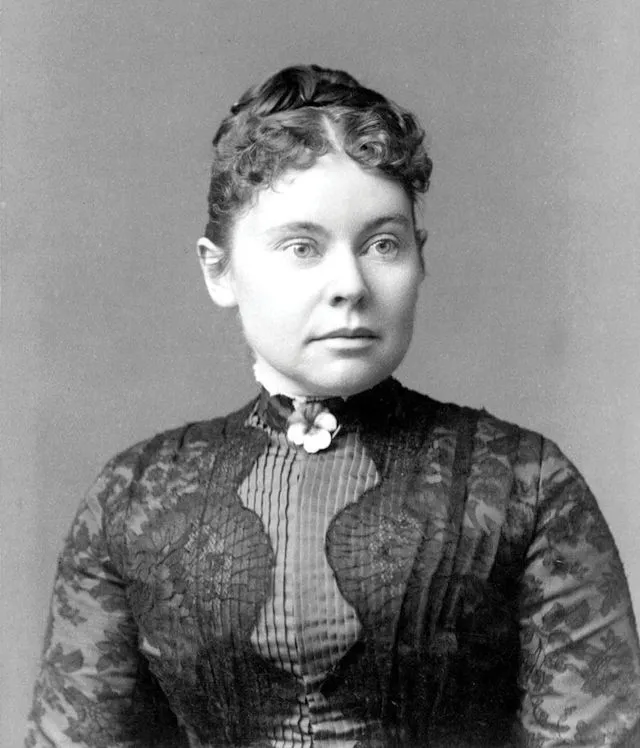
Cold Cases Case file
The House on Second Street: The Borden Murders, 1892
On a hot August morning in 1892 a Fall River banker and his second wife were killed with a hatchet in the small, locked house they shared with the banker's younger daughter and an Irish housekeeper. The daughter was tried for both murders the next year and acquitted. No one else was ever charged, and the case has been argued over for more than a century without ever being settled.
- Case type
- Cold case
- Status
- Unexplained
- Event date
- August 4, 1892
- Location
- 92 Second Street, Fall River, Massachusetts - United States
- Evidence
-
- Official record
- Testimonial
- Physical
The open question Who killed Andrew and Abby Borden in the small, locked house at 92 Second Street that morning, given that the one person tried for it was acquitted and no one else was ever charged?
On the morning of 4 August 1892, in a small frame house on Second Street in Fall River, Massachusetts, a seventy-year-old banker was killed on the sitting-room sofa where he had lain down to rest, and his sixty-four-year-old wife was killed in an upstairs guest room where she had been making the bed. Each was struck repeatedly in the head with a hatchet-like weapon. The killings happened about an hour apart, inside a locked house, while the household’s Irish housekeeper washed the outside windows and the banker’s younger daughter was somewhere on the premises. There was no forced entry, nothing of value was taken, and no one saw a stranger come or go.
A week later the banker’s daughter was arrested. Ten months after that, a Massachusetts jury acquitted her of both murders. No one else was ever charged. The case has been argued over for more than a century, and the dominant historical reading is that the daughter did it, while the legal record holds that she did not, and the documentary record holds that no one else has been shown to have done it either. This is an account of what the record holds, what the evidence can and cannot establish, and where the theories begin. We keep three things separate, as always: what is documented, what the evidence shows, and what is still only a hypothesis.
The documented account
Andrew Jackson Borden was seventy. He had risen from a carpenter’s apprentice to a Fall River financier, with directorships in banks and cloth mills and an extensive holding of rental property. He was widely characterised by his contemporaries as frugal and severe, and tightly preoccupied with money. His first wife, Sarah, had died in 1863, leaving him with two daughters, Emma, by then thirty-nine, and Lizzie, thirty-two. In 1865 he married Abby Durfee Gray, who became stepmother to the two girls. By August 1892 Abby was sixty-four. The household at 92 Second Street consisted of Andrew, Abby, Lizzie, and the live-in housekeeper Bridget Sullivan, generally said to have been about twenty-five, whom the family called Maggie. Emma was visiting friends in Fairhaven, about fifteen miles away. The Bordens’ maternal uncle, John Vinnicum Morse, had arrived unexpectedly on the afternoon of 3 August and stayed the night.
The day before the murders was uneasy. The household had been ill for several days with what was suspected at the time to be food poisoning; Abby had walked to a doctor over fears of being poisoned. On the afternoon of 3 August a pharmacist’s clerk named Eli Bence, at D.R. Smith’s pharmacy on the corner of Columbia and South Main, would later testify that a woman he identified as Lizzie tried to buy ten cents’ worth of prussic acid, a deadly cyanide solution, saying she needed it to kill moths in a sealskin cape. Without a prescription, Bence refused. Two other men in the shop, named Kilroy and Hart, also identified the customer. Bence’s account was heard at the preliminary hearing; the trial court would later exclude it as too remote in time.
The morning of 4 August was hot. Bridget Sullivan came downstairs about a quarter past six and prepared breakfast. Morse, Andrew and Abby ate together, and Morse left the house on his own errands shortly before nine. Andrew went out to walk his usual rounds in town. Bridget began washing the outside windows. Abby went upstairs to make the bed in the second-floor guest room, the one called the John Morse Guest Room. Lizzie’s whereabouts across that window became the central evidentiary problem of the case. Sometime between roughly nine and half past ten, Abby was killed in the guest room, struck from behind with a hatchet-like weapon, falling face-down between the bed and the wall. The medical examiner Dr William A. Dolan would later testify, on the basis of stomach contents and body temperature, that she had died roughly an hour or more before her husband.
Andrew returned home between about half past ten and a quarter to eleven. According to Bridget, he had difficulty getting in. The front door was triple-locked. She opened it for him, swearing under her breath at the catches, and testified that as she did so she heard Lizzie laugh from the top of the stairs. The laugh is a single-witness detail and belongs to Bridget’s testimony; we treat it as that. Andrew lay down on the sitting-room sofa to rest. He was struck repeatedly in the head and face with a hatchet-like weapon, dying where he lay.
Bridget was resting in her third-floor attic room when the call came. By her trial testimony, it was given roughly ten or fifteen minutes after the City Hall bell struck eleven. The wording she remembered was: “Maggie, come down!” and, when she asked what was the matter, “Come down quick; Father’s dead; somebody came in and killed him.” A neighbour, Dr Seabury Bowen, was sent for, and a family friend, Alice Russell, was sent for. The police arrived shortly afterward. Not long after that, Abby’s body was found upstairs.
The investigation produced a slim physical record. A search of the cellar turned up a hatchet head, with the handle freshly broken off, in a box of tools. Four hatchets and axes in all were found in the house. None showed laboratory-confirmed bloodstains. No blood was reported on Lizzie’s person or on the dress she was wearing when police arrived. On Sunday 7 August, in the kitchen, Alice Russell saw Lizzie burn a blue dress in the stove. Lizzie told her it was stained with old paint. Russell did not report it immediately, but disclosed it later to the grand jury, and at trial she testified that she saw no blood on the dress.
The inquest sat from 9 to 11 August before Judge Josiah C. Blaisdell of the Second District Court of Bristol, with the district attorney, Hosea M. Knowlton, examining. Lizzie testified for three days without legal counsel. Her account of her movements that morning shifted across the days, particularly her whereabouts when Andrew returned and her time in the loft of the barn. At one point, pressed on the contradictions, she answered: “I don’t know what I have said. I have answered so many questions and I am so confused I don’t know one thing from another.” She was reported to have been on prescribed morphine for nerves through that period, a fact the defence would later raise. She was arrested on 11 August and charged with both murders. A grand jury convened on 7 November and indicted her on two counts of murder on 2 December 1892.
The trial opened in the Massachusetts Superior Court at New Bedford on 5 June 1893 and ran for fourteen trial days, ending on 20 June. The case was heard by a three-judge panel: Chief Justice Albert Mason and Justices Caleb Blodgett and Justin Dewey. The state was led by Knowlton, with William H. Moody as junior counsel; Moody would later serve as US Attorney General and as an Associate Justice of the US Supreme Court. The defence was led by the family lawyer Andrew V. Jennings, with Melvin O. Adams and former Massachusetts Governor George D. Robinson.
Two of the prosecution’s strongest threads were excluded on the law. The inquest testimony was ruled inadmissible because Lizzie had been effectively in custody, without counsel, and not warned against self-incrimination. Eli Bence’s prussic acid testimony was excluded as too remote in time. The trial was otherwise entirely circumstantial. The victims’ skulls, preserved at autopsy, were produced in court, and Lizzie fainted. Justice Dewey’s charge to the jury was understood at the time, and by historians since, to lean toward the defence. The jury retired on 20 June and returned a verdict of not guilty on both counts after a brief deliberation, generally reported as roughly an hour to an hour and a half, with one early newspaper account claiming the jurors had agreed within ten or fifteen minutes and waited out of respect for the prosecution. Lizzie was acquitted and freed.
Afterward, no one else was ever charged. Lizzie and Emma inherited the bulk of Andrew’s estate. They bought “Maplecroft” at 306 French Street in The Hill, the more affluent side of Fall River, and moved out of the Second Street house. Lizzie began to use the name Lizbeth A. Borden. She was, in the documented account of her later life, widely shunned by Fall River society. In June 1905, after Lizzie’s social attachment to the stage actress Nance O’Neil drew local press attention, Emma left Maplecroft and never spoke to her sister again. Lizzie died of pneumonia at Maplecroft on 1 June 1927, age sixty-six. Emma died nine days later. Their estates passed largely to friends and to the Fall River Animal Rescue League, to which Lizzie’s bequest was substantial. Both sisters were unmarried and childless. They are buried at Oak Grove Cemetery, Fall River.
The evidence
What the record establishes firmly is a double murder inside a small, locked house with five people known to have been in or around it that morning, and the acquittal of the one person ever brought to trial. What it does not establish is who struck the blows. Each piece below is worth weighing for exactly that gap.
The geography of the morning. The house was small and tightly enclosed, and the killings happened in two well-spaced episodes inside it, with Bridget washing windows in the yard and Lizzie somewhere on the premises across the whole window. The case turns on whether anyone else could plausibly have entered, killed Abby in the upstairs guest room, waited inside the house for roughly an hour, killed Andrew on the sofa, and left without being seen by Bridget, by Lizzie, or by any neighbour. Cuts one way: Lizzie was, by her own account and Bridget’s, on the premises throughout. Cuts the other: there is no eyewitness placing her at either killing, no confirmed blood on her clothing or her person at discovery, and no weapon definitively tied to her. The case is inferential at every point.
The inquest inconsistencies. Across three days of unrepresented testimony, Lizzie placed herself, when Andrew returned, on the stairs coming down, in the kitchen, and coming down from the loft of the barn. She accounted for an extended absence in the barn loft, in mid-summer heat, by saying she had gone looking for lead for fishing sinkers and had eaten pears. The defence answer was documented: she had been effectively in custody, without counsel, on prescribed morphine, and under intensive questioning. The trial court excluded the inquest testimony for those reasons. Legally, it did not count against the verdict. Historically, it remains a load-bearing reason later writers have continued to return to her. The inconsistencies and the defence answer to them are both part of the record.
The hatchet head. The hatchet head found in the cellar, with its handle freshly broken off, is the closest the state ever came to a physical weapon. The prosecution theory was that the handle had been blood-soaked and destroyed. The defence answered that the state could not produce the handle, could not show blood on the head, and could not connect the implement to anyone in particular. The item was effectively neutralised at trial. It identifies a piece of household ironwork. It does not identify a killer.
The burned dress. Alice Russell’s testimony that she watched Lizzie burn a blue dress in the kitchen stove three days after the murders, while the house was still under suspicion, is the single most discussed piece of evidence the jury heard. Cuts one way: destroying a garment under those conditions, however explained, is poor judgment. Cuts the other: Russell herself testified she had seen no blood on the dress, and Lizzie’s account that it was old and paint-stained was consistent with the household record. The dress is gone. The question of what was on it cannot now be answered.
Bridget Sullivan’s testimony. Bridget was the one independent witness on the premises across the whole morning. Her account of timing, of Andrew’s triple-locked return, of being called by Lizzie, and of seeing no blood on Lizzie’s clothes is the spine of the documented timeline. The trial accepted her as a witness, and the historical record has largely followed. Her credibility is one of the firmer footings in the file.
The prussic acid attempt, excluded at trial. Bence’s identification, corroborated by two other witnesses, placed someone he was confident was Lizzie at D.R. Smith’s pharmacy the day before the murders, attempting to buy a deadly cyanide solution under a pretext. Cuts one way: if accepted, it supplies a frame of premeditation. Cuts the other: it is an identification rather than a sale, it is in a different modality from a hatchet, no poison was found in either victim’s stomach, and the trial court excluded it as too remote. Legally, it did not exist at trial. Historically, it is one of the most-debated facts in the file.
The forensic gap. Police searches found no blood on Lizzie, no blood-laden clean-up at any of the basins or drains in the house, and no implement definitively bloodied. The prosecution’s bridge across that gap was the burned dress: the killer had worn something that was later destroyed. That is a theory, not a forensic proof, and the jury heard it and acquitted.
The trial record and the acquittal. This is the firmest official document the case has, and its meaning has to be stated carefully. Knowlton’s prosecution rested on opportunity, on the household friction between Lizzie and her stepmother, on documented financial friction between Lizzie and her father over property transfers to Abby’s relatives, and on the circumstantial threads above. Two of the strongest pillars, the inquest testimony and the prussic acid attempt, were excluded on the law. The defence answered with no eyewitness, no blood, no weapon, no motive established by evidence, and a respectable woman of standing. The jury returned not guilty on both counts. In law, that finding means the state failed to prove its charge against the one person it ever brought to trial. It does not establish who committed the murders, and it forecloses any assertion that the acquitted was guilty. That is the load-bearing point in this file, and it sits at the centre of it.
The theories
Everything in this section is a hypothesis, and every person it touches is long dead. It needs saying plainly before any of it: Lizzie Andrew Borden was tried for both murders and acquitted by a Massachusetts jury on 20 June 1893, no new charges were ever brought against her, and no one else has ever been charged. Bridget Sullivan, John Vinnicum Morse, and Emma Borden were not charged either. Nothing below is a finding. It is the argument that has gone on around a record that never closed.
The dominant historical reading, which the jury rejected. The view that Lizzie was the killer is held by many but not all later historians of the case. Edmund Lester Pearson, in Studies in Murder (1924), the first influential modern account, drew on Knowlton’s papers and concluded in that direction. Cara Robertson, in The Trial of Lizzie Borden (2019), the standard current account, ends in roughly that direction without claiming proof. This is the dominant later historical reading, attributed to those writers and others, and it is also the reading the jury that heard the case rejected. The case as the state put it was excluded in part on the law and acquitted in full on the evidence. The historical reading is offered against that legal outcome, not in place of it, and it cannot be treated as a finding. We will not tell you Lizzie Borden killed her parents, because the court that had the final word on her acquitted her, and the documentary record does not support any such assertion against a deceased and acquitted woman.
Bridget Sullivan. Bridget was the only other person in the house across the morning. A late, unsourced story, surfacing in popular literature, claims she made a deathbed confession in Butte, Montana, in 1948 in which she said she had “helped Lizzie out at the trial.” Serious researchers, in particular the Lizzie Borden Warps & Wefts and Mondo Lizzie Borden commentators, have found no documentary basis for the confession, have challenged the details against Bridget’s documented circumstances in her last illness, and have shown the related anecdote of her supposed work for a “George Winston in Anaconda” to be unfounded. The story belongs in this file only as an unverified later account about a deceased and never-accused woman, paired with the researcher critique of it. We do not name Bridget Sullivan as the killer, and we do not treat the alleged confession as if it were testimony.
John Vinnicum Morse. Morse stayed the night of 3 August and was out on errands during the killings. Police looked at him at the outset. His alibi, that he had visited cousins on Pleasant Street and returned by streetcar, was corroborated under investigation and held up. He was never charged. He is in this file only as an early-investigation line of inquiry that closed, attributed to the record and applied to a man long dead.
Emma Borden. Crime writer Frank Spiering, in Lizzie (1984), advanced a theory that Emma, who was visiting friends in Fairhaven about fifteen miles away, might have slipped back to Fall River and committed the killings. Emma had a documented alibi in Fairhaven and was never charged or seriously investigated. The theory belongs here strictly as Spiering’s attributed argument, offered against the documented alibi of a deceased and never-charged woman, not as a fact.
A stranger or intruder. This was the defence framing at trial, and it survives as a stock theory of the case. Robinson’s summation reportedly argued that the killing had required a maniac or a devil from outside the household. No physical evidence has ever surfaced of an intruder; there was no forced entry, no theft, and no witness saw an unknown person enter or leave. The reading sets the gap in the case without filling it.
The motive theories. Some later twentieth-century writers, principally Victoria Lincoln in 1967 and Frank Spiering in 1984, advanced speculative motive theories. None has any contemporaneous documentary foundation, and we do not amplify them.
What remains unknown
The case never closed, and the residue is substantial. Nobody knows who killed Andrew and Abby Borden. The inquest inconsistencies were either the marks of guilt or the marks of shock and an unrepresented interrogation, and the trial court that heard about the conditions threw the inquest out on the law. Whether Eli Bence’s prussic acid customer was indeed Lizzie cannot now be established, and the trial court excluded the question on a different ground. What was on the dress Lizzie burned on Sunday cannot be known, because the dress is gone. What John Morse knew, if anything more than he gave at trial, went with him. The legal answer in this file is settled: a jury acquitted, no further charge was brought, and no one else has been charged in more than a century. The historical answer is not.
So we will not tell you that Lizzie Andrew Borden killed her parents, because a Massachusetts jury acquitted her, no further charge was ever brought, the documentary record does not support any such assertion against a deceased and acquitted woman, and the later historical reading that points at her is offered against the legal outcome rather than in place of it. We will not tell you that Bridget Sullivan did it, because she was never charged, the deathbed-confession story has no documentary foundation and has been challenged on the facts by serious researchers, and the trial accepted her as a witness. We will not tell you that John Vinnicum Morse did it, because his alibi was corroborated and he was never charged. We will not tell you that Emma Borden did it, because one writer’s later theory does not displace her documented alibi in Fairhaven, and she was never charged. And we will not tell you that a stranger did it, because no evidence of an intruder ever surfaced.
What we can tell you is the documented shape of the thing. On a hot August morning in 1892, in a small house on Second Street, two people who lived there were killed with a hatchet, about an hour apart, while a fifth person stood washing the outside windows in the yard. The banker’s daughter was tried for it the next year and acquitted. More than a century later, the question the case turns on is the one it opened with. Somebody killed Andrew and Abby Borden inside their own locked house that morning, and we do not know who.
Sources
Primary / primary-adjacent
- Trial of Lizzie A. Borden, Massachusetts Superior Court, New Bedford, 5-20 June 1893 (UMKC Famous Trials archive, home page)
- Bridget Sullivan, trial testimony (UMKC Famous Trials)
- Alice Russell, trial testimony (UMKC Famous Trials)
- John V. Morse, trial testimony (UMKC Famous Trials)
- Inquest testimony of Lizzie Borden, 9-11 August 1892 (UMKC Famous Trials)
- The Knowlton Papers, Fall River Historical Society
- Fall River Historical Society, Lizzie Borden Collections (overview)
Secondary / contextual
- “Lizzie Borden,” Wikipedia
- “Lizzie Borden Trial: 1893,” Encyclopedia.com
- “Lizzie Borden,” Encyclopedia Britannica
- “The Borden Trial: Biographies of Key Figures,” UMKC Famous Trials
- “How Lizzie Borden Got Away With Murder,” Smithsonian Magazine
- “With the Borden Murder House in New Hands, Will Real History Get the Hatchet?” Smithsonian Magazine
- National Women’s History Museum, “The Lizzie Borden Trial of 1892”
- Cara Robertson, The Trial of Lizzie Borden (2019), NPR review
- law.jrank.org, “Lizzie Borden Trial: 1893”
- Lizzie Borden Warps & Wefts (research blog)
- The Hatchet: A Journal of Lizzie Borden & Victorian America
- Yankee Magazine, “The Long Silence of Lizzie Borden”
- Biography.com, “Lizzie Borden Was Acquitted. But Her Real Punishment Came After the Trial”
- SimplyForensic, “The Chilling Mystery of Andrew Borden”