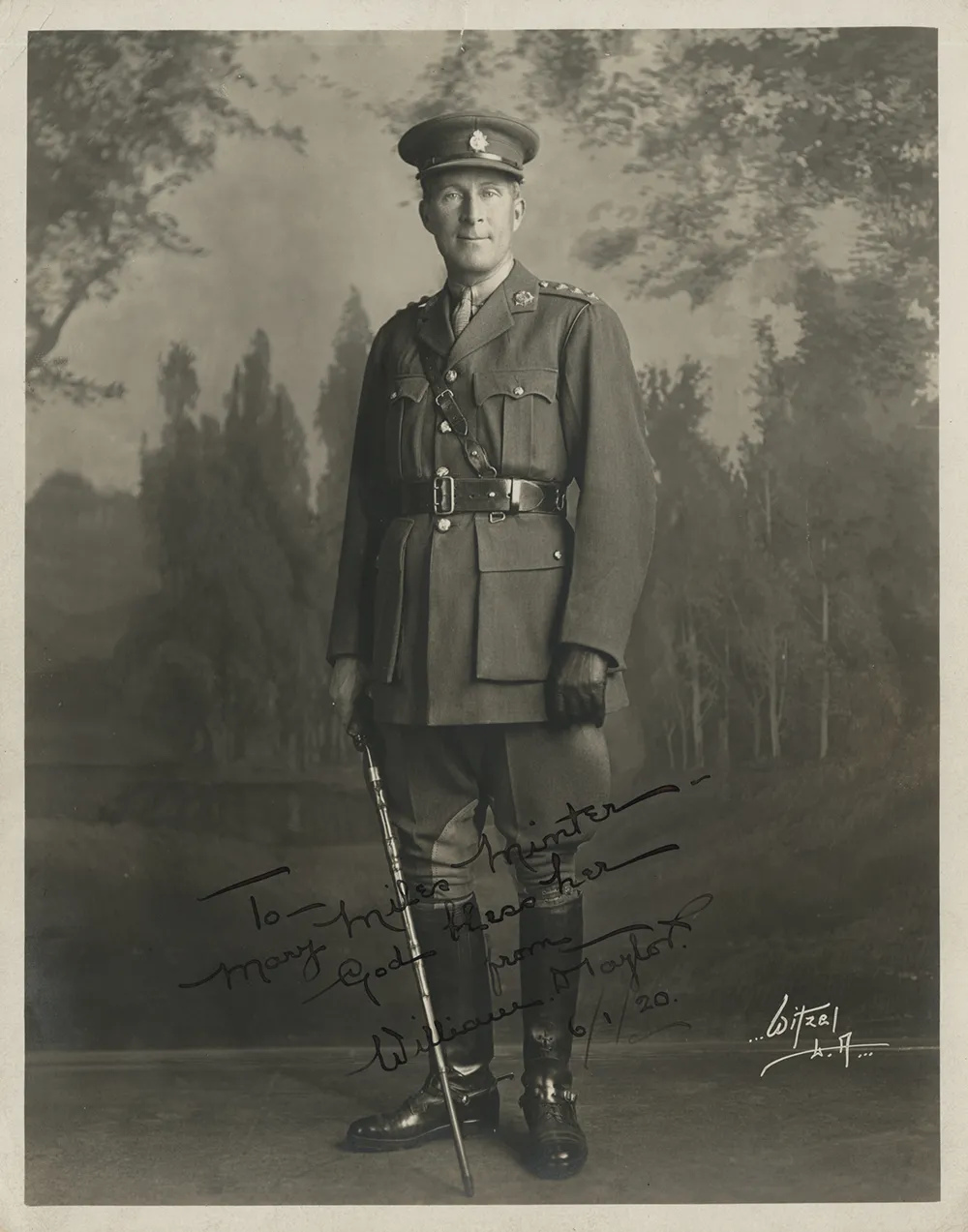
Cold Cases Case file
The Bungalow at Alvarado Court: The Murder of William Desmond Taylor, 1922
On the night of 1-2 February 1922 the silent-film director William Desmond Taylor was shot dead inside his Hollywood bungalow. The investigation was compromised at the scene the following morning, a string of named persons of interest came and went, and the case has remained officially unsolved for more than a century.
- Case type
- Cold case
- Status
- Unexplained
- Event date
- February 2, 1922
- Location
- Alvarado Court Apartments, 404 South Alvarado Street, Westlake, Los Angeles (Taylor was shot at his bungalow on the evening of 1 February 1922 and his body was discovered there the following morning) - United States
- Evidence
-
- Official record
- Testimonial
- Physical
The open question Who shot William Desmond Taylor in his Alvarado Court bungalow on the night of 1-2 February 1922, and why has no theory advanced in the century since been accepted as a solution?
On the evening of Wednesday, 1 February 1922, the silent-film director William Desmond Taylor was shot once in the chest inside his bungalow at the Alvarado Court Apartments in Los Angeles. His cook-valet found him fully dressed and dead inside the door at about half past seven the following morning. By the time the police arrived, motion-picture industry figures had already been through the rooms. The official investigation, criticised at the time and ever since, never produced a charge. More than a century later, the case is still on the books of the Los Angeles Police Department as unsolved.
Around that empty result has gathered one of the densest fields of named-suspect theory in American crime writing. A private 1967 inquiry by the director King Vidor, made public in 1986 in Sidney Kirkpatrick’s book A Cast of Killers, pointed at the stage mother of a young actress in Taylor’s circle. A 2004 book by Charles Higham pointed at the actress herself. A 1990 book by Robert Giroux pointed at narcotics suppliers operating through a contract killer. A 1964 deathbed confession by another largely forgotten actress put a fifth name on the table. Through all of it, no one has ever been charged. Every named suspect is now deceased. This is an account of what the record actually holds, what the evidence can and cannot show, and where the theories begin. We keep three things separate, as always: what is documented, what the evidence shows, and what is still only a hypothesis.
The documented account
William Desmond Taylor was not the name on his birth certificate. He was born William Cunningham Deane-Tanner on 26 April 1872 in Carlow, Ireland. He emigrated to North America in his youth, lived for a time in Kansas, and settled in New York, where in December 1901 he married Ethel May Hamilton in an Episcopal ceremony and went to work for an antiques shop on Fifth Avenue connected to his father-in-law. A daughter, Ethel Daisy, was born in 1902 or 1903; the sources differ on the year. In October 1908 he abandoned his wife and daughter; family and friends spoke later of mental lapses. The divorce was finalised in 1912.
By around 1912 he had relocated to California and reinvented himself as William Desmond Taylor. He worked first as an actor and then as a director, eventually for Famous Players-Lasky, which later became Paramount. He directed roughly fifty-nine silent films between 1914 and 1922, including an adaptation of Anne of Green Gables in 1919 with the young actress Mary Miles Minter, and an adaptation of Huckleberry Finn in 1920. He enlisted in the Canadian Expeditionary Force in 1918, served, and reportedly rose to the rank of Major. By 1922 he was president of the Motion Picture Directors Association, a senior figure in the industry. In 1921 he travelled to New York, re-established contact with his ex-wife and daughter, and named Ethel Daisy his legal heir.
He lived alone, by the standards of the household record, in bungalow 404-B at the Alvarado Court Apartments on South Alvarado Street, in the Westlake district of Los Angeles. His previous valet, Edward F. Sands, had forged Taylor’s signature for sums totalling more than five thousand dollars while Taylor was in Europe in the summer of 1921, taken his car, his checkbook, and his jewelry, and disappeared. Some accounts add a later return-burglary at the bungalow, with footprints on Taylor’s bed. After Sands, Taylor hired Henry Peavey, a Black First World War veteran in his late thirties, who had been with him for roughly six months at the time of the killing.
On the evening of 1 February 1922, Taylor’s only documented visitor was the actress Mabel Normand, then the leading female comedy star in Hollywood and a close friend. By the inquest record she arrived at about seven, talked with him in the bungalow, accepted a book he had been keeping for her, and left at approximately a quarter to eight, with Taylor walking her out to her chauffeured limousine. Peavey had left earlier in the evening, by his own inquest statement at about a quarter past seven, and did not return until the following morning. Some time after Normand’s departure, Taylor was shot once, in the bungalow. The convention in the secondary record puts the time at around ten minutes to eight; the inquest verdict gave only the date.
At about half past seven on the morning of Thursday, 2 February 1922, Peavey arrived for work, entered the bungalow, and found Taylor fully dressed, lying on his back just inside the door, with blood about his mouth and no apparent sign of a struggle. He ran outside; his screams brought the neighbours.
What happened next, in the gap before the Los Angeles Police Department secured the scene, is the single most-cited procedural failure in the case. By the contemporaneous and broadly accepted account, an unidentified man who introduced himself as a doctor entered the bungalow, briefly declared the death natural, a stomach hemorrhage, and then left; he was never identified. Before LAPD officers arrived, a number of motion-picture industry figures had entered the rooms, most consistently identified as Charles Eyton, the general manager of Famous Players-Lasky, who testified at the inquest two days later. The strongest defensible statement the secondary record will support is that studio personnel went through the bedroom and the bungalow and removed letters, documents, and other potentially embarrassing material before the police took control of the scene. Specific lists of the items removed differ between sources. Other names sometimes attached to that morning’s traffic through the bungalow in popular retellings are not confirmed in the inquest record.
The body was turned over by coroner’s staff and the gunshot wound discovered. The coroner’s inquest sat on 4 February 1922, before Coroner Frank A. Nance; Dr A. F. Wagner, the autopsy surgeon, described the wound; Peavey, Normand, Eyton, and an LAPD officer testified. The hearing lasted less than an hour. The jury’s verdict, as preserved in the retyped transcript in the Taylorology archive, found that Taylor “came to his death on the 1st day of February 1922, by gunshot wound of the chest inflicted by some person or persons unknown to this jury with intent to kill or murder.” His funeral was held on 7 February 1922 at St. Paul’s Cathedral, Los Angeles, and he was buried at what is now the Hollywood Forever Cemetery.
The investigation that followed ran across early February 1922 and continued for years, then decades. Press coverage was sensational and was driven by the Hearst chain, with Adela Rogers St. Johns reporting heavily for the Los Angeles Examiner. Edward Sands, Taylor’s missing former valet, was publicly named as a person sought and was never produced. The District Attorney’s office took the lead from the LAPD over time, with successive DAs Thomas Lee Woolwine, Asa Keyes, and Buron Fitts handling the file. In 1937 Charlotte Shelby, the mother of Mary Miles Minter, herself requested a grand-jury examination after testimony in a civil suit by her other daughter, Margaret. Almost twenty years after the murder, DA Buron Fitts concluded there was insufficient evidence for an indictment of Shelby and recommended the file be retained. By 1940, by the standard account, most of the physical evidence and police records relating to the case had disappeared. A small set of copy documents was released only in 2007.
In 1967 the veteran Hollywood director King Vidor, then in his early seventies and researching a film he intended to direct on the case, spent the year interviewing surviving witnesses, including a retired LAPD detective who had been on the murder in 1922. Vidor never made the film and never published his findings. After his death in 1982, his authorised biographer Sidney Kirkpatrick reportedly found a locked strongbox of Vidor’s Taylor-case research behind a water heater in Vidor’s garage, and used the material as the basis of his 1986 book A Cast of Killers. The book reconstructs Vidor’s private conclusion that Charlotte Shelby had killed Taylor. The reconstruction is itself contested. Bruce Long, editor of the Taylorology archive, subsequently catalogued what the secondary literature reports as more than a hundred factual errors in Kirkpatrick’s text, and disputed the Vidor reading. The Shelby reading is the most discussed solution in the modern literature. It is not an established one.
No one has ever been charged with the murder of William Desmond Taylor. The case remains officially unsolved.
The evidence
What the record establishes firmly is a single-shot killing inside a bungalow, a scene compromised before the police arrived, and an investigation that lost most of its file long before any later inquiry could reopen it. What it does not establish is who fired the shot. Each item below is worth weighing for exactly that gap.
The wound and the bullet. A single .38-calibre round was recovered from the body at autopsy. According to Dr A. F. Wagner’s testimony at the inquest, preserved in the Taylorology transcript, the bullet entered low on the left side of the torso, about six and a half inches below the armpit, traversed both lobes of the left lung, crossed the chest cavity, and lodged near the right collarbone. From the placement of the holes in the jacket and vest the inquest concluded Taylor’s arms had been raised when he was shot. Secondary sources have inferred from the upward trajectory of a single shot that the shooter was short, perhaps around five feet, or was crouched or holding the weapon at an unusual angle. That is an inference from one round and from a scene that no longer exists for reconstruction. It should be read as a calibrated inference, not a finding. The pistol was never recovered.
The compromised scene. The procedural failures of the morning of 2 February 1922 are the strongest documented throughline in the case file. That an unidentified “doctor” briefly declared a stomach hemorrhage and then left, and that he was never identified, is consistent across the secondary record and is the kind of detail that should ideally be checked against the 1922 daily press; on the strongest defensible reading it is part of the documented chronology. That Charles Eyton, the general manager of Famous Players-Lasky, was in the bungalow before the police arrived is firm; he testified at the inquest. That studio personnel removed letters, documents, and other potentially compromising material before LAPD took control of the scene is consistent across the strongest secondary sources. The specific contents removed are not. This is the documented basis for everything later writers have said about studio interference. It is not, in itself, a documented cover-up by named officials.
What was found in the bungalow. Taylor’s pockets, by the case record, contained about seventy-eight dollars in cash, a silver cigarette case, a Waltham pocket watch, a pen knife, a locket containing a photograph of Mabel Normand, and a two-carat diamond ring. The valuables on his body were not taken, which weighs against simple street robbery as a motive. A larger sum of cash that Taylor had reportedly shown his accountant the day before was said to be missing, though the specific amount is not documented. The negative is the firmer point: a robber who leaves the watch, the ring, and the cash in the pockets is not behaving like a robber.
The Minter letters and the “monogrammed nightgown.” Among the items reported in the bungalow after the killing were letters from Mary Miles Minter, the young Paramount actress whom Taylor had directed in Anne of Green Gables three years earlier. The letters are well attested in the case record and were later established, by the secondary literature, to have been written in 1919, three years before Taylor’s death. The iconic tabloid image, a pink monogrammed nightgown bearing Minter’s initials, is more contested. One detailed secondary review reports that no nightgown or photograph of one was ever produced, that the image was largely an invention of Hearst reporters, and that what was actually found was a monogrammed handkerchief; Minter at one point publicly offered a thousand-dollar reward to anyone who could produce the alleged nightgown. The nightgown is part of the tabloid memory of the case. It should be treated as attributed period reporting, not as documented physical evidence.
Mabel Normand’s last visit. That Normand was at the bungalow on the evening of 1 February 1922 and left at approximately a quarter to eight, with Taylor walking her out to her car, is established at the inquest and consistently reported. The recurring summary in the secondary literature, that they blew kisses to each other as her limousine drove away, traces to the same source line and is given here as the case record gives it. The case’s central negative is contained in a single careful phrase: Normand was the last person known to have seen Taylor alive. The phrase does not foreclose anyone else having seen him afterward. The minutes between her departure and the conventional time of death are short.
Peavey’s account. Peavey’s inquest statement is preserved in the Taylorology transcript. He had left the previous evening at about a quarter past seven, returned the next morning, and found Taylor inside the door with no signs of disturbance. He was questioned repeatedly by police and reporters; Hearst journalists by one documented account attempted to extract a confession by frightening him. Press coverage of him was openly racist and mocking, in language characteristic of the era. He was cleared by police. He moved to San Francisco, was institutionalised in 1930 with untreated syphilis, and died at Napa State Hospital in December 1931. The treatment of him in 1922 is part of the documented history of the case and is recorded here as such, without adopting its framing.
The 1937 grand-jury examination. In 1937 the District Attorney’s office, under Buron Fitts, examined Charlotte Shelby in connection with the murder, on her own request, after testimony in a civil suit by her other daughter, Margaret, was reported to bear on her whereabouts on the night of the killing. Fitts concluded that there was insufficient evidence to support an indictment and recommended the file be retained. Whether Fitts’s conclusion reflected the evidence or, as the standing speculation has it, reflected payments allegedly made to successive DAs by Shelby, is itself contested. The payoff allegations have never been proven. The documented item is the non-indictment, on insufficient evidence.
The lost LAPD file. By the standard account in the secondary record, most of the physical evidence and police records of the Taylor case had disappeared by about 1940. A small set of copy documents was released in 2007. This is the structural reason no later analysis has been able to settle the case. By the time King Vidor began his 1967 inquiry, the primary record was already partly gone, and the systematic preservation of the 1922 newspaper coverage in the Taylorology archive stands in for much of the police file the case once had.
Vidor’s 1967 inquiry and Kirkpatrick’s 1986 reconstruction. That Vidor spent 1967 researching the case in preparation for a film he never made, that he interviewed a retired LAPD detective who had been on the murder in 1922, and that he privately concluded Charlotte Shelby had killed Taylor, is consistent across the secondary record. Kirkpatrick’s A Cast of Killers (1986) reconstructs that inquiry and asserts the Shelby solution. The reconstruction is itself disputed. Bruce Long’s Taylorology project catalogued what the secondary literature describes as more than a hundred factual errors in Kirkpatrick’s text and rejected the Vidor reading. Whether the errors necessarily mean Vidor’s conclusion was wrong is a separate question; what they mean is that the proof offered for it is not reliable on its own terms. The Shelby reading is attributed historical speculation. The article does not adopt it.
The honest summary of the evidence is short. A single shot was fired inside a bungalow on the night of 1-2 February 1922. The pistol was never found. The scene was compromised before the police arrived. The investigation that followed lost most of its file before any later analyst could reopen it. The strongest documented throughline is not a culprit; it is the procedural collapse of the investigation, which the case has never recovered from.
The theories
Everything in this section is a hypothesis, and every person it touches is long dead. It needs to be said plainly before any of it: no one was ever charged with the murder of William Desmond Taylor. Mabel Normand was investigated and cleared. Henry Peavey was investigated and cleared. Mary Miles Minter, Charlotte Shelby, Edward F. Sands, and Margaret Gibson were never charged. Nothing below is a finding. It is the argument that has gone on around a record that never closed.
Charlotte Shelby, attributed (King Vidor 1967, Kirkpatrick 1986). Charlotte Shelby (born Lily Pearl Miles, 1877; died 1957) was the mother of Mary Miles Minter and Margaret Shelby, and was characterised in the secondary record as having tightly managed her daughters’ careers. The case advanced against her is circumstantial: she was reported to own a .38-calibre revolver, with unusual bullets that secondary sources have described as similar to the one that killed Taylor; she was said to have disposed of the pistol later; police characterised her early statements as evasive; she spent extended periods in Europe in the years after the killing; and the never-proven allegation has long been that she paid off successive DAs. The most-cited version of the theory is King Vidor’s privately-held 1967 conclusion, as reconstructed by Sidney Kirkpatrick in A Cast of Killers (E. P. Dutton, 1986). In Kirkpatrick’s reconstruction, Shelby entered the bungalow while Taylor was walking Mabel Normand to her car, surprised her daughter Mary Miles Minter hiding inside, and shot Taylor on his return. Counterweight: Bruce Long’s Taylorology archive catalogued what the secondary literature reports as more than a hundred factual errors in Kirkpatrick’s text and rejected the Vidor reading. In 1937 District Attorney Buron Fitts examined the case for indictment and concluded there was insufficient evidence. The Shelby reading is the most-cited solution in the modern literature. It is also the most contested. It is attributed historical speculation about a deceased, never-charged woman, and is offered here as that and nothing more.
Mary Miles Minter, attributed (Higham 2004). Mary Miles Minter (born Juliet Reilly, 1902; died 1984) was a Paramount ingenue whose career Taylor had guided; she was nineteen at the time of the murder, and Taylor was forty-nine. Letters from her, written in 1919, were among the items reported in the bungalow. By her own later statements she had been romantically attached to Taylor; Robert Giroux and others reported that Taylor had considered himself too old for her and had often declined to see her, and the secondary record on his side of the matter is consistent with reserve rather than reciprocation. Minter is the subject of the thesis advanced by Charles Higham in Murder in Hollywood: Solving a Silent Screen Mystery (University of Wisconsin Press, 2004), which argues that Minter herself killed Taylor in unrequited rage and that a studio-driven cover-up shielded her. Higham’s reputation as a popular biographer has been contested elsewhere for over-confident conclusions; the Minter-killer thesis is his attributed argument, and reputable researchers, including the Taylorology project, reject it. Minter was never charged. She lived until 1984. Higham’s reading is one writer’s argued thesis about a deceased, never-charged woman, and is offered here as that and nothing more.
Edward F. Sands, attributed. Edward F. Sands (born Edward Fitzgerald Snyder, 1894; death date and place unknown) had been Taylor’s valet earlier in 1921. While Taylor was in Europe that summer, Sands forged Taylor’s signature on cheques for more than five thousand dollars, took the car, the checkbook, distinctive cigarettes, and jewelry, and disappeared; some accounts add a later return-burglary of the bungalow with footprints on Taylor’s bed. Sands disappeared on or about the day of the murder and was never seen or heard from again. The LAPD considered him a strong suspect but never issued a murder warrant. An LAPD captain was quoted at the time, per the Taylorology summary, saying the police sought him as a complaining witness in the existing felony cases. A 1926 private-detective claim that Sands had fled by boat to Cuba and onward toward China is uncorroborated. Sands’s disappearance is documented. His responsibility for the murder is not. He is recorded here strictly as a never-charged suspect about whom the trail went cold within weeks.
Henry Peavey, investigated and cleared. Henry Peavey, the cook-valet who found Taylor’s body, was briefly questioned as a suspect, treated brutally by Hearst reporters who attempted to frighten a confession out of him, and cleared by police. The 1922 press treatment of Peavey, who was Black and gay, is one of the most documented examples of period prejudice in the case file. It is reported here as historical fact about the press coverage, not adopted as framing. Peavey moved to San Francisco, was institutionalised in 1930, and died at Napa State Hospital in December 1931. He was cleared by the original investigation, and the standing modern position is that he was not the killer.
Mabel Normand, investigated and cleared. Mabel Normand (born 1893; died 23 February 1930, of pulmonary tuberculosis, aged thirty-six) was the last person known to have seen Taylor alive. She was Taylor’s close friend, and the locket on Taylor’s body at the time of his death contained her photograph. She was subjected to a lengthy LAPD interrogation and ruled out as a suspect; most later writers have done the same. By a quotation that has long circulated in the secondary record, she reportedly asked a friend not long before her own death whether anyone would ever find out who had killed Bill Taylor. The scandal that followed the murder, amplified by tabloid reporting that linked her name to cocaine without ever linking her to the killing, contributed to the effective end of her career. She died of tuberculosis in 1930 at thirty-six. She was cleared by the original investigation. She was not the killer, and the documented injury done to her by the coverage is recorded here as part of the case’s documented harms, and for no other reason.
A contract killing arranged by narcotics suppliers (Giroux 1990, attributed). Robert Giroux, in A Deed of Death: The Story Behind the Unsolved Murder of Hollywood Director William Desmond Taylor (Knopf, 1990), argued that Taylor, having tried to help Mabel Normand break a cocaine dependency, had met with federal prosecutors to assist them in pursuing her suppliers, and that those suppliers hired a contract killer to remove him. The case for the theory is that it explains the absence of personal motive and the precision of a single shot, and that it is consistent with Normand’s documented difficulties and Taylor’s documented anti-narcotics activism in the industry. The case against it is that no contract killer has ever been named, no documentary trail to a specific dealer has been produced, and the theory rests on Giroux’s argued reading rather than a finding. It is offered here as Giroux’s attributed thesis, and as nothing more.
The Margaret Gibson deathbed confession, attributed. Margaret Gibson (1894-1964), an actress who had appeared with Taylor in four short films at Vitagraph in 1914 and later worked under the name Patricia Palmer, suffered a fatal heart attack at her Hollywood home on 21 October 1964. By the standard retelling she asked for a priest and reportedly confessed to neighbours that she had killed Taylor in 1922, having become hysterical the previous evening while watching a television programme on the case. Her name had not appeared in the 1922 LAPD investigation. By the time of the alleged confession, the original police file was already largely gone. The confession has been dismissed by authorities and was never independently corroborated. The Taylorology project treats it as folklore rather than evidence. It is offered here as one attributed late account about a deceased, never-charged woman, and is not adopted as a finding.
The “studio cover-up” framing, partly documented, mostly attributed. As historical fact, the LAPD investigation was procedurally compromised from the morning of 2 February 1922 onward: the unidentified “doctor,” the studio personnel inside the bungalow before police arrived, the removal of letters and documents, the brief inquest. As an explanation of why the case was never solved, the procedural failures are the strongest documented throughline in the file. As an asserted cover-up by named studios and named District Attorneys, the framing is attributed historical speculation, advanced in varying forms by Kirkpatrick, by Higham, and by William J. Mann in Tinseltown (2014), with varying named accused. The narrow documented part, that studio personnel went through Taylor’s rooms before the police did, is firm. The broader claim of a coordinated, multi-decade cover-up by named officials is not proven and is recorded here strictly as attributed.
What remains unknown
The case never closed, and the honest residue is substantial. No one knows who fired the shot inside the bungalow on the night of 1-2 February 1922. No one knows who the “doctor” was who briefly declared the death natural and then disappeared. No one has a documented list of the letters and documents that left the bungalow with the studio personnel that morning. No one has explained why successive District Attorneys, with one case examined for indictment in 1937, declined to bring a charge. And no one knows whether the LAPD file that was largely missing by 1940 was destroyed deliberately or simply lost to ordinary attrition. More than a century on, the case stands almost exactly where the inquest left it on 4 February 1922: a man killed by some person or persons unknown, with intent to kill or murder.
So we will not tell you that Charlotte Shelby killed William Desmond Taylor, because she was never charged, a District Attorney examined the case for indictment in 1937 and concluded the evidence was insufficient, and the most-cited reconstruction that names her has been catalogued by other researchers as resting on more than a hundred factual errors. We will not tell you that Mary Miles Minter killed him, because the thesis that names her is one writer’s argued reading, rejected by other researchers, and she was never charged. We will not tell you that Edward Sands killed him, because the LAPD never issued a murder warrant against him, and a man who disappears is not, by disappearing, a killer. We will not tell you that Henry Peavey killed him, because he was investigated and cleared, and the press treatment of him in 1922 is itself part of the documented record of the case’s injustices. We will not tell you that Mabel Normand killed him, because she was investigated and cleared, the scandal that followed her name was a documented harm and not a documented finding, and she died of tuberculosis at thirty-six asking the same question this account asks. We will not tell you that Margaret Gibson killed him, because her name appeared in no police file from 1922, the file itself was largely gone by the time she spoke, and her alleged 1964 deathbed account has been dismissed by authorities and never independently corroborated. We will not tell you that narcotics suppliers had him killed, because no contract killer has ever been named and no documentary trail to a specific dealer has ever been produced. And we will not tell you there was a coordinated, multi-decade cover-up by named officials, because the narrow documented part of that framing, that studio personnel were in his bungalow before the police were, will not bear the weight of the broader claim.
What we can tell you is the documented shape of the thing. A silent-film director of standing in Hollywood was shot once inside his own bungalow on the night of 1-2 February 1922, and was found by his cook-valet the following morning. Studio personnel were in his rooms before the police took the scene. The pistol was never recovered. The investigation lost most of its file within twenty years. Every named person of interest is now deceased, and not one of them was ever charged. The question the case turns on is the one the coroner’s jury left open in less than an hour in February 1922. Someone fired a single .38-calibre round into William Desmond Taylor’s chest, and we do not know who.
Sources
Primary / primary-adjacent
- Coroner’s inquest, William Desmond Taylor, 4 February 1922, Los Angeles County (retyped transcript, Taylorology archive)
- The Taylorology project (Bruce Long, ed.), 1985-2009, archived contemporaneous press coverage
- Internet Archive, Taylorology issue 1
- Homestead Museum Blog, press photo of the bullet, 8 February 1922
The most-cited primary record of this case, the LAPD’s own file, is largely lost: by the standard account in the secondary literature, most of the physical evidence and police records had disappeared by about 1940, and only a small set of copy documents was released in 2007. The systematic preservation of the 1922-onward newspaper coverage in the Taylorology archive stands in for much of what would otherwise be the police record, and this account leans on it accordingly.
Secondary / contextual
- Sidney D. Kirkpatrick, A Cast of Killers (E. P. Dutton, 1986), book record
- Robert Giroux, A Deed of Death (Knopf, 1990), Publishers Weekly review
- Charles Higham, Murder in Hollywood: Solving a Silent Screen Mystery (University of Wisconsin Press, 2004)
- William J. Mann, Tinseltown: Murder, Morphine, and Madness at the Dawn of Hollywood (Harper, 2014), author page
- Wikipedia, “William Desmond Taylor”
- Wikipedia, “Mabel Normand”
- Wikipedia, “Mary Miles Minter”
- Wikipedia, “Charlotte Shelby”
- Wikipedia, “Henry Peavey”
- Wikipedia, “Edward F. Sands”
- Wikipedia, “Margaret Gibson (actress)”
- Dictionary of Irish Biography, “Taylor, William Desmond”
- Jake Hinkson, “Hollywood’s First Murder Mystery,” Criminal Element
- Tampa Bay Times, “A Hollywood murder mystery gets yet another solution” (1990 retrospective)