Cold Cases Case file
The Man on Somerton Beach: The Tamam Shud Case, 1948
On 1 December 1948 a well-dressed man was found dead against a seawall on an Adelaide beach, the labels cut from his clothes, a scrap reading "Tamam Shud" hidden in a pocket, and a pencilled code in a book that has never been deciphered. The inquest could not say who he was or how he died. Researchers have since put a likely name to him, Carl Webb, but it is not officially confirmed, and the cause of death and the rest of the puzzle remain open.
- Case type
- Unexplained death
- Status
- Partially explained
- Event date
- December 1, 1948
- Location
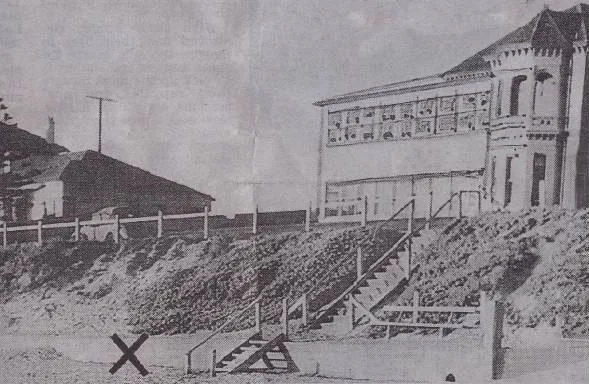
- Somerton Park beach, Adelaide, South Australia (the body was found against the seawall on the morning of 1 December 1948) - Australia
- Evidence
-
- Physical
- Official record
- Testimonial
The open question Even with a likely name now attached to him, what killed the Somerton Man, why was his identity so thoroughly erased, and what did the hidden scrap and the undeciphered code mean?
He was found at about half past six on the morning of 1 December 1948, slumped against the seawall at Somerton Park beach in Adelaide. He was well dressed for a beach: a suit jacket, a knitted pullover, a shirt and tie, and shoes that were clean and recently polished. He carried no wallet, no hat, and no identification. The labels had been cut from his clothing. Months later, in a hidden fob pocket, police found a tiny rolled scrap of paper printed with two words, “Tamam Shud,” Persian for “ended” or “finished,” the closing words of the Rubaiyat of Omar Khayyam. A copy of that book turned up carrying a faint pencilled code and a telephone number, and the code has never been deciphered.
A coronial inquest that ran for years could not say who the man was or how he died. In 2022, two researchers announced that DNA work had given him a likely name, Carl Webb, a Melbourne-born electrical engineer. That conclusion is strong, but it is not, as of the latest reporting, officially confirmed, and even if it holds, it answers only the smallest of the case’s questions. What killed him, why his identity was so thoroughly erased, and what the scrap and the code meant are all still open. This is an account of what the record holds, what the evidence can and cannot establish, and what survives the 2022 development. We keep three things separate, as always: what is documented, what the evidence shows, and what is still only a hypothesis.
The documented account
At approximately 6:30 am on 1 December 1948, a body was found on Somerton Park beach in Adelaide, South Australia, slumped against the seawall. Witnesses reported having seen a man lying in the same position the previous evening, around 7 to 8 pm on 30 November, but the inquest could not conclusively establish that this was the same man.
The man was well dressed: a suit jacket, a knitted pullover, a shirt and tie, and clean, recently polished shoes. He was about 180 cm tall, with grey eyes and fair-to-ginger hair greying at the temples. He carried no wallet, no hat, and no identification.
The labels had been cut from his clothing. A small number of items still bore a name, given across accounts as “Keane,” “Kean,” or “T. Keane,” on a tie, a laundry bag, and a singlet. Police could not match those names to any missing person at the time. Decades later, researchers would connect the name “Keane” to a relative of the man they identified as Carl Webb, but that is part of the 2022 work, not the 1948 record.
An inquest was opened in 1949 and concluded on 14 March 1958 under the coroner, Thomas Erskine Cleland. It could not determine the man’s identity or his cause of death. (Two men named Cleland feature in this case and should not be confused: Thomas Erskine Cleland, the coroner, and John Burton Cleland, the University of Adelaide pathologist who examined the body. They were different people.)
The scrap came next. In a concealed fob pocket, police found a tiny rolled piece of paper printed with the words “Tamam Shud.” The phrase is Persian for “ended” or “finished,” the last words of Edward FitzGerald’s translation of the Rubaiyat of Omar Khayyam. Police publicized the scrap in order to find the book it had come from.
Following a public appeal, a copy of the Rubaiyat was brought to police. Most accounts report that it had been found in a car parked near Glenelg, in the Jetty Road area, though the exact circumstances and timing of the discovery are reported with some variation across sources. The book’s final page, the one carrying “Tamam Shud,” had been torn out, and tests indicated that the recovered scrap matched it. In the back of the book police found two further things: a faint set of pencilled capital letters, which became known as the code, and a telephone number.
The telephone number led police to a young nurse who lived a short distance from the beach. In the case literature she was for many years referred to only by the nickname “Jestyn”; her real name became public years afterward. The documented facts about her are narrow. She told police she did not know the dead man. She was also linked to having given a copy of the same Rubaiyat to a wartime acquaintance, an Army officer named Alfred Boxall, who was later found alive with his copy intact. Everything beyond those facts, what she may have known and what her reaction meant, is interpretation, and it is handled strictly as theory below.
In May 2021, South Australian authorities exhumed the body to attempt DNA recovery. Separately, the University of Adelaide engineering professor Derek Abbott had since around 2011 been working with hair embedded in the plaster death mask cast in 1948. On 26 July 2022, Abbott and the American genetic genealogist Colleen Fitzpatrick announced that DNA from the death-mask hair, combined with genetic-genealogy family-tree work, had identified the man as Carl “Charles” Webb, born 16 November 1905 in Footscray, Melbourne, an electrical engineer and instrument maker. This is the single most important point to state carefully: it is the conclusion of two researchers, not an official identification. South Australia Police described themselves as “cautiously optimistic” and said the matter would ultimately be determined by the coroner. As of the latest reporting, no formal coronial finding confirming the Webb identity has been published. The name is a researcher’s conclusion, not a certified fact, and this article does not treat it as one.
The evidence
What the record establishes firmly is a man who took deliberate steps to leave nothing identifiable on his body, a death that medicine could not explain, and a single printed scrap that tied him to a specific book. What it does not establish is who he was with certainty, how he died, or what the code meant. Each item below is worth weighing for exactly those gaps.
The autopsy and inquest record. The examination found a spleen that was strikingly enlarged, reported as about three times normal size, along with congestion of the liver and other organs. The man’s last meal, a pasty, was still in his stomach. The University of Adelaide pharmacologist Cedric Stanton Hicks suggested that the findings were consistent with a rare cardiac glycoside such as digitalis or strophanthin, a class of poison that could decompose and become undetectable shortly after death. That suggestion is the basis for the inquest’s recorded suspicion of poisoning. The decisive limit is that no poison was ever detected. The coroner recorded a suspicion he could not prove, framed in language that has been reported consistently across the sources but should be read as attributed: that he would be prepared to find the man died from a poison, probably a glucoside, not accidentally administered, but that he could not say whether it was self-administered or given by another, and ultimately that he was unable to say who the man was or how he died. The inquest established that the cause of death was not determinable. It did not establish poisoning as a fact. The “poison” line is the document’s strongest thread and also its central unresolved point.
The Tamam Shud scrap. This is a physical object on the coronial record. It was found in a concealed pocket and was printed with the phrase “Tamam Shud,” and testing linked it to the torn-out final page of the recovered Rubaiyat. What it establishes is a deliberate act of concealment and a link to one specific book. What it does not carry is any message beyond the two printed words. It is suggestive and it is mute.
The Rubaiyat and the code. Also physical: a copy of the book with its final page torn out, and in the back a faint set of pencilled capital letters alongside a telephone number. The code has resisted every decryption attempt for more than seventy years. Cryptographic reviews, including a 1978 examination involving Defence cryptographers and later analyses, concluded that no reliable decryption is possible and that the letters may not be a true cipher at all. Any “solution” circulating online is unverified. No source supports a confirmed reading. What the code establishes is that someone wrote a sequence of letters in the back of the book. It does not establish that the letters mean anything.
The 2021 exhumation and the 2022 DNA identification. This is the genuinely new evidence, and it is also the case’s sharpest limit. The body was exhumed by South Australian authorities in May 2021 for DNA. The Abbott and Fitzpatrick identification rested principally on DNA recovered from hair on the 1948 death mask, combined with extensive genetic-genealogy family-tree construction, with reported matches to descendants of distant cousins on both the paternal and maternal lines. Presented as a method, it is strong work. Presented as a status, it is unfinished: this is a researcher conclusion, not an official identification. South Australia Police were “cautiously optimistic” and said the determination rested with the coroner; the forensic DNA work on the exhumed remains and a coronial finding were the steps that official confirmation would require. As of the latest reporting, no such finding has been published. The identification is the leading edge of this case and, at the same time, its key open question.
The theories
Everything in this section is a hypothesis. None has been established, and the central questions, what killed the man and what the case’s strange artifacts meant, are left open here on purpose, because that is where the honest record leaves them.
Poisoning by an undetectable glycoside. The inquest pharmacologist, Hicks, suggested a cardiac glycoside such as digitalis or strophanthin, a poison that could decompose before it could be found. This is the basis for the coroner’s recorded suspicion of poisoning, and it accounts for the enlarged spleen and the organ congestion. It remains a suspicion. No poison was detected, and the inquest did not find one.
Natural or undetermined death. Because no poison was ever found, an alternative reading is that the death was natural, or simply undetermined. This is where the official record actually sits: cause unknown. It is the least dramatic reading and the one the inquest’s own language supports.
The Cold War espionage theory. The 1948 setting, the removed labels, the pencilled code, and the concealed scrap have fueled a long-running and popular theory that the man was a spy. It is unproven. The case against it is specific. Cryptographers have concluded that the “code” is likely not a cipher, and Abbott has suggested the letters may be mundane, in one account the first letters of names of horses the man had bet on. The retired detective Gerald Feltus attributed the espionage theory’s appeal to the post-war climate rather than to any evidence in the file. The removed labels, the code, and the scrap are documented. The leap to “intelligence agent” is not.
Suicide. The suspected, undetectable poison, and the deliberate concealment of a scrap reading “ended” or “finished,” have been read as consistent with suicide. In the post-2022 framing, Abbott and Fitzpatrick have added that Carl Webb’s reported personal history fits such a reading. That biographical material depends entirely on the contested identification: if the man is not Webb, it does not apply, and even if he is, none of it was before the inquest. It is an interpretation, not a finding.
Personal-connection theories tied to the nurse. A telephone number in the book led police to the nurse known publicly as “Jestyn.” Over the decades, researchers, media, and a family member have advanced theories that she knew the man, that there was some relationship, and that espionage was involved. A relative has spoken publicly raising such possibilities. None of this is established fact. It is attributed, contested theory, and this publication does not assert any relationship, any knowledge, any paternity, or any espionage role touching her. The honest documented facts remain only these: a phone number in the book led police to her, she told police she did not know the man, and she had earlier given a Rubaiyat to Alfred Boxall, who was found alive. We publish nothing private about her living descendants and speculate about none of them.
What remains unknown
A likely name does not close this case. Even if the Webb identification holds, the cause of death is still officially undetermined. The reason the labels were cut from his clothing is unexplained. The pencilled code has resisted seventy years of analysis and may not be a code at all. Any connection between the man and the nurse is unproven, and the documented record supports only that her phone number was in the book and that she said she did not know him. And the identification itself, the one part of the puzzle that looks close to an answer, still awaits official confirmation from the coroner.
So we will not tell you the man was poisoned, because no poison was ever found and the inquest recorded only a suspicion it could not prove. We will not tell you he was a spy, because the labels and the code that feed that theory are real but the agent behind them was never shown to exist, and the experts who have studied the code doubt it is a code. We will not tell you he took his own life, because that reading rests on a suspected poison no test confirmed and on a biography that depends on an identification the coroner has not certified. And we will not tell you, flatly, that he was Carl Webb, because the researchers who reached that conclusion present it as their finding, and the authority that would make it official has not yet done so.
What we can tell you is the documented shape of the thing. A well-dressed man with no name and no labels was found dead against a seawall, with a hidden scrap that read “finished” and a book full of letters no one can read. Three quarters of a century, a coronial inquest, an exhumation, and a modern DNA workup later, he may at last have a name. The rest of the file is still open.
Sources
Primary / primary-adjacent
- Derek Abbott (University of Adelaide), “The Tamam Shud Case Coronial Inquest”
- State Records of South Australia, “But what poison? Mystery of the Somerton Man”
- CNN, “Somerton man mystery ‘solved’ as DNA points to man’s identity, professor claims” (26 July 2022)