Cold Cases Case file
The Woman Who Erased Herself: The Isdal Woman, 1970
She moved through Norway under at least eight names, scratched the labels from her clothes and her doctor's name from a prescription, and kept her own travels in code. Fifty years and a modern reinvestigation later, no one can say who she was, or how she died.
- Case type
- Cold case
- Status
- Unexplained
- Event date
- November 29, 1970
- Location
- Isdalen (Ice Valley), below Mount Ulriken, near Bergen, Norway - Norway
- Evidence
-
- Physical
- Official record
- Testimonial
- Instrumental
The open question Who was the woman who moved through Norway under at least eight false identities, and did she take her own life or was she killed?
Before she died, someone took the time to remove the labels from her clothes. The brand marks on her hairbrush had been rubbed away. The prescribing doctor’s name was scratched off the tube of cream in her luggage. She had checked into hotels across Norway under at least eight different names, paid in cash, changed rooms within the same building, and kept a record of her own movements written in a private code. By the time the police closed her file, they had assembled an unusually thick dossier on what she had done, where she had stayed, and what she carried. They could not tell you the one thing that mattered most: who she was.
More than fifty years later, after an exhumation, isotope analysis of her preserved teeth, and a modern DNA workup, that is still true. This is an account of what the record holds, what the evidence can and cannot establish, and why a case this thoroughly documented remains, on its two central questions, completely open. We keep three things separate, as always: what is documented, what the evidence shows, and what is still only a hypothesis.
The documented account
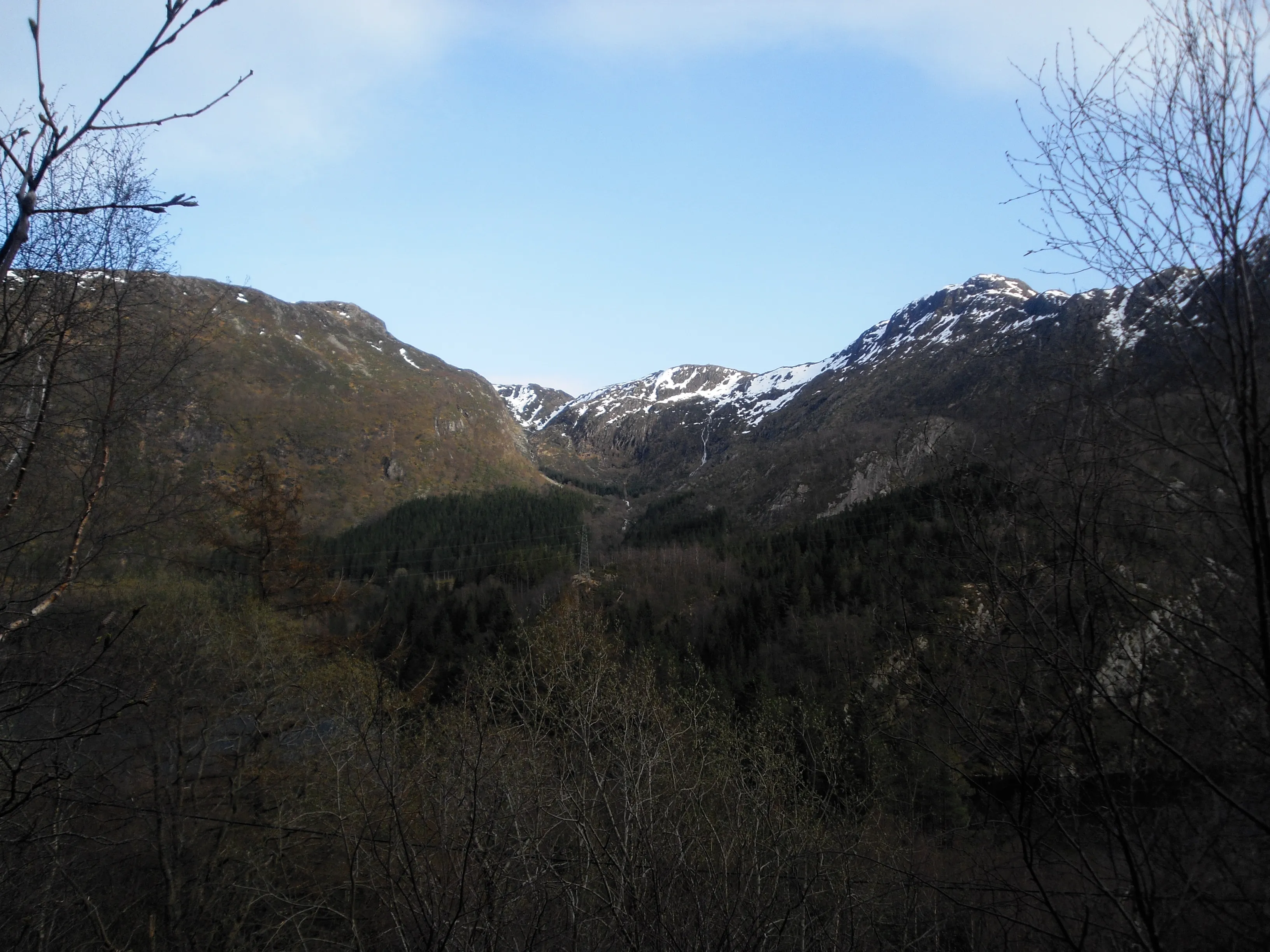
On 29 November 1970, a man hiking with his two young daughters in Isdalen, the valley known in English as Ice Valley, in the hills below Mount Ulriken near Bergen on the Norwegian west coast, came upon the body of a woman among the rocks. She had been badly burned. The front of the body and the clothing were heavily damaged by fire; the face was not recognizable. Several accounts describe her lying on her back among the scree with her head pointing downhill. The valley carries a grim local reputation in some retellings, but that is colour, not evidence, and we set it aside.
Around her, investigators logged a scatter of objects, several fire-damaged and several stripped of any identifying marks. The inventory reported across the sources includes a burnt liquor bottle, plastic bottles described as smelling of petrol, an umbrella, rubber boots, a woollen jumper and scarf, nylon stockings, a purse, a matchbox, the plastic cover of a passport, traces of burnt paper, a watch, two earrings, and a ring. A fur hat was reportedly found with traces of petrol beneath it, cited by some accounts as a sign that an accelerant had been used at the scene. That detail should be held with care: the role of any accelerant is reported rather than firmly established, and at least one account notes conflicting descriptions of how much fire there was beyond what burned the body.
The single most consistent fact about the scene is also its most telling. The identifying marks and labels on her belongings had been deliberately removed, scratched off, or rubbed away. This was not one item. It was a pattern.
The autopsy added two findings that anchor everything that follows. Soot was found in her airways, which means she was alive while the fire burned. And she had ingested a large quantity of phenobarbital, a barbiturate sedative sold in Norway under the brand name Fenemal. The reported count varies across accounts from “more than 50” to “over 70”; the safest figure is that she had taken between 50 and 70 pills, with undigested tablets reportedly still in her stomach, suggesting more than a single dose. One account reports her blood concentration as sub-lethal, around 4.5 mg per 100 ml, a detail that matters to the question of how she died and which should be treated as needing confirmation against the forensic record. The official cause of death was framed as a combination of phenobarbital poisoning and carbon monoxide poisoning, with the fire injuries possibly contributing. As reported by Today I Found Out, citing the medical examiner, the cause was assumed to be a combination of poisoning from Fenemal and carbon monoxide, with the injuries from fire as a possible contributing factor.
The autopsy also noted a bruise on her neck, described as consistent with a fall or a blow. That ambiguity is in the original framing itself, and it matters: this is the single most contested detail in the entire case, and we return to it below. Finally, the examiners removed and preserved her jaw and teeth and retained tissue samples. That decision, made in 1970, is the reason a modern reinvestigation was possible at all.
About three days after the body was found, two suitcases in the left-luggage office at Bergen railway station were traced to the woman. The link reported across the sources is a fingerprint lifted from a pair of sunglasses in the luggage that matched a print taken from the body. Exactly how the luggage was traced, whether a claim ticket was found among her belongings or the match was made another way, is not cleanly established, so we do not assert a mechanism.
The contents of the suitcases extended the same pattern of concealment. Reported items, with some variation between accounts, include wigs, clothing with the labels cut out, several pairs of non-prescription glasses, the sunglasses that carried the fingerprint, a hairbrush with the brand marks rubbed off, cosmetics, eczema cream, foreign currency including German Deutsche Mark notes alongside Norwegian and other coins, maps and timetables, and a coded notepad. A prescription for cream was reportedly found with the prescribing doctor’s name scratched off. Some accounts add silver spoons with the monograms filed away; that detail comes through coverage derived from the later investigation and should be treated as unconfirmed.
The coded notepad has been the source of much dramatic retelling, and the sober reading is the one that holds. The pad contained columns of letters and numbers that looked like a cipher. Investigators interpreted them as a log of dates and places she had stayed, a personal travel record, and when matched against hotel registration cards the columns reportedly mapped her movements through Bergen, Oslo, Stavanger, Trondheim, and locations abroad. It was not a decoded secret message. It told investigators where she had been, not who she was or why she was there.
That same question, who she was, ran into a wall built deliberately. She had checked into hotels and boarding houses under multiple aliases, most commonly reported as at least eight registrations, using what investigators believed were several false passports. Across them she consistently claimed Belgian nationality, filled out forms in German or French, and varied her stated birthdate and occupation; nearly every address she gave proved false. The names reported across the sources, with spellings that vary and should be confirmed, include Genevieve Lancier, Claudia Tielt, Claudia Nielsen, Alexia Zarne-Merchez, Vera Jarle, Fenella Lorck, and Elisabeth Leenhouwer. Witnesses recalled a woman of roughly 30 to 40, dark-haired, who moved often and behaved carefully. Those descriptions are recollection, not forensics.
In 1970, Bergen police closed the case with a finding widely reported as probable suicide. The reconstruction attributed to the investigation had her travel to the remote valley, consume alcohol and pills, and set her belongings and herself alight. That conclusion was contested at the time, and it has been contested since. As reported by A&E, the son of one of the original investigators said his father never could accept that they had to close the case.
The evidence
What the record establishes robustly is a deliberate, systematic concealment of identity, and that she was alive, heavily sedated, and burning. What it does not establish is who did the concealing, or whether she died by her own hand or another’s. Each anchor below is worth weighing for exactly that gap.
The autopsy. It establishes that she was alive during the fire, from the soot in her airways, and that she was heavily dosed with phenobarbital. Both findings are solid and consistently reported. It does not establish suicide or murder. The reported sub-lethal blood concentration cuts against a simple picture of a fatal overdose taken before she lay down, and is one reason the suicide finding is doubted. But a sub-lethal level is also consistent with a person incapacitated by drugs and then killed by carbon monoxide and fire. The autopsy is compatible with either a self-inflicted death or an incapacitation-then-death scenario, and it does not choose between them.
The neck bruise. It establishes that a neck injury was noted. It does not establish a blow struck by another person. The original framing was explicitly “a fall or a blow,” ambiguous from the outset. This is the strongest single thread for foul play and, at the same time, the most ambiguous piece of evidence in the file. It is the linchpin of the murder reading and it cannot bear the weight of a conclusion. We do not write that she was struck; the record does not say that.
The removed labels and the scratched-off prescription. These establish a deliberate, systematic effort to erase identity from her clothing, her toiletries, and her documents. They do not establish who did the erasing, and that is the quietly decisive point. A person hiding her own past would do exactly this. So would someone disposing of a body and covering their tracks. The de-labeling is the case’s signature fact and it is genuinely neutral between the two readings. Its neutrality is the heart of the problem.
The coded notebook. It establishes that she kept a private, encoded record of her own movements, consistent with someone living a deliberately concealed life. It does not establish espionage, a contact network, or a message to anyone. The standard reading is a travel log. It tells us she travelled a great deal and wanted those travels unreadable to others. It does not tell us why.
The aliases and the multilingualism. Together they establish a person deliberately hiding who she was: mobile, resourced with multiple passports and currencies, and competent in several languages. They do not establish a profession. The profile is consistent with an intelligence operative, but it fits a fugitive, a smuggler, or a woman fleeing a private past equally well.
The modern forensic work. This is the genuinely new evidence. In 2016 the body was exhumed for DNA, and the jaw and teeth preserved in 1970 were recovered for analysis. In 2017, stable-isotope analysis of the teeth, reported through the NRK and BBC investigation and associated in coverage with the University of Canberra, with other accounts also citing Norwegian institutions such as Kripos and the University of Bergen, produced a probabilistic finding about her origins. As research reported via Mental Floss put it, she probably grew up in eastern or central Europe and then moved west toward France during adolescence, possibly just before or during the Second World War. Several accounts narrow this further to a birth around 1930 and the broader German-French border region, with southern Germany named in some; that specificity should be attributed, not stated flatly. Her dental work was described as consistent with central European work. DNA analysis yielded a profile, with reported results tying her maternal line to south-eastern Europe and other reporting tying broader ancestry to western continental Europe; these are different things and the sources blur them. What the forensic work establishes is a probable geographic origin and an approximate birth year. What it does not establish is her name. There has been no confirmed database match and no genealogical identification. She remains unidentified. That is the indispensable bottom line.
A note on her age sits inside this. In 1970 the police estimated roughly 25 to 40. A birth around 1930, implied by the isotope work, would put her nearer 40 at her death. We note the discrepancy rather than assert a single age.
Hypotheses and open questions
Everything in this section is a hypothesis. None has been established, and the two questions that matter most, her identity and her cause of death, are left open here on purpose, because that is where the honest record leaves them.
Suicide, the 1970 police conclusion. For it: the heavy phenobarbital dose, the soot in her airways showing she was alive in the fire, the absence of any witness to a second person, and the simple fact that it is the only conclusion an investigating authority actually reached. Against it, and unresolved: the difficulty and rarity of a drugged person carrying out self-immolation in a remote winter valley; the reported sub-lethal blood concentration; the neck bruise; and, above all, the systematic erasure of identity, which is hard to square with an ordinary suicide. Some of the original investigators never accepted the finding.
Murder, or foul play. For it: the neck injury, if it was a blow; the practical implausibility of the self-immolation scenario; the de-labeling read as a third party covering tracks; and the sub-lethal pill level, which argues against a straightforward overdose. Against it, and unresolved: there is no direct evidence of a second person at the scene, no identified suspect, and the soot finding shows she was alive in the fire, which any murder theory must also accommodate, for instance through incapacitation followed by fire. Foul play is plausible. It is not proven. The honest position is that suicide versus murder is unresolved. We present both and conclude neither.
The espionage hypothesis, which is unproven and is presented here only as labeled speculation. The circumstantial case is genuinely suggestive: the multiple aliases and passports, the methodical concealment, the multilingualism, the cash, the encoded travel log, and the Cold War setting. Specific details circulate in the secondary coverage, that her movements allegedly coincided with secret Norwegian Penguin anti-ship missile tests, and that she was reportedly seen speaking with a navy officer. Those specifics are thinly and indirectly sourced, and we flag them as unconfirmed speculation rather than fact. The case against the theory is twofold. First, even sources sympathetic to it concede that she was conspicuous, not covert: memorable dark features, travelling alone, changing hotels in ways that drew notice. That is poor tradecraft for an operative. Second, and decisively, none of it has ever been substantiated. No intelligence service has confirmed she was an agent, and the most cited supporting details remain unverified. The aliases, the de-labeling, the multilingualism, and the Cold War backdrop are documented. The leap to “intelligence operative” is not. It is the most seductive ending available and the least supported by the evidence.
A word on the modern leads. Press coverage periodically reports new threads pointing toward an identity, a French connection, and others more recent. None has produced a confirmed identification, and some attach to named living individuals on thin and recent grounds. We do not import any such name. The safe and accurate ceiling is this: leads continue to surface, and none has produced an identification.
What remains unknown
She has never been identified. That is the bottom line, and a modern reinvestigation with tools the 1970 examiners could not have imagined has not changed it. The cause of death was never settled either. The 1970 finding of probable suicide was doubted from the start, including by some of the men who signed off on closing the file, and the murder reading is plausible and unproven. The forensic work has narrowed her likely origins, a childhood in central or eastern Europe, a move west toward the German-French border and France, a birth around 1930, but it has not produced a name or a database match.
So we will not tell you she took her own life, because the most authoritative answer reached in 1970 was contested then and remains contested now, and the evidence is compatible with more than one ending. We will not tell you she was murdered, because there is no identified second person, no suspect, and the strongest thread for foul play, the neck bruise, was ambiguous from the moment it was recorded. We will not tell you she was a spy, because the documented record shows a woman who concealed her identity with remarkable thoroughness, not a woman who was ever shown to be working for anyone, and because she was visible in ways a careful operative would not have been. And we will not tell you who she was, because two generations of investigators, working with a richer evidentiary record than most identified cases ever produce, could not.
That is the strange shape of this case. It is one of the most thoroughly documented anonymous deaths in modern European history. We know an extraordinary amount about what she did and almost nothing about who she was or how she died. The volume of evidence has deepened the mystery rather than dissolved it. The file is still open.
Sources
Primary / investigation
- NRK + BBC World Service, “Death in Ice Valley” (investigation, 2017-2018): overview
- Wikipedia, “Isdal Woman”